Loading...
Serving Lake Charles, LA and surrounding areas. (337) 549-5532
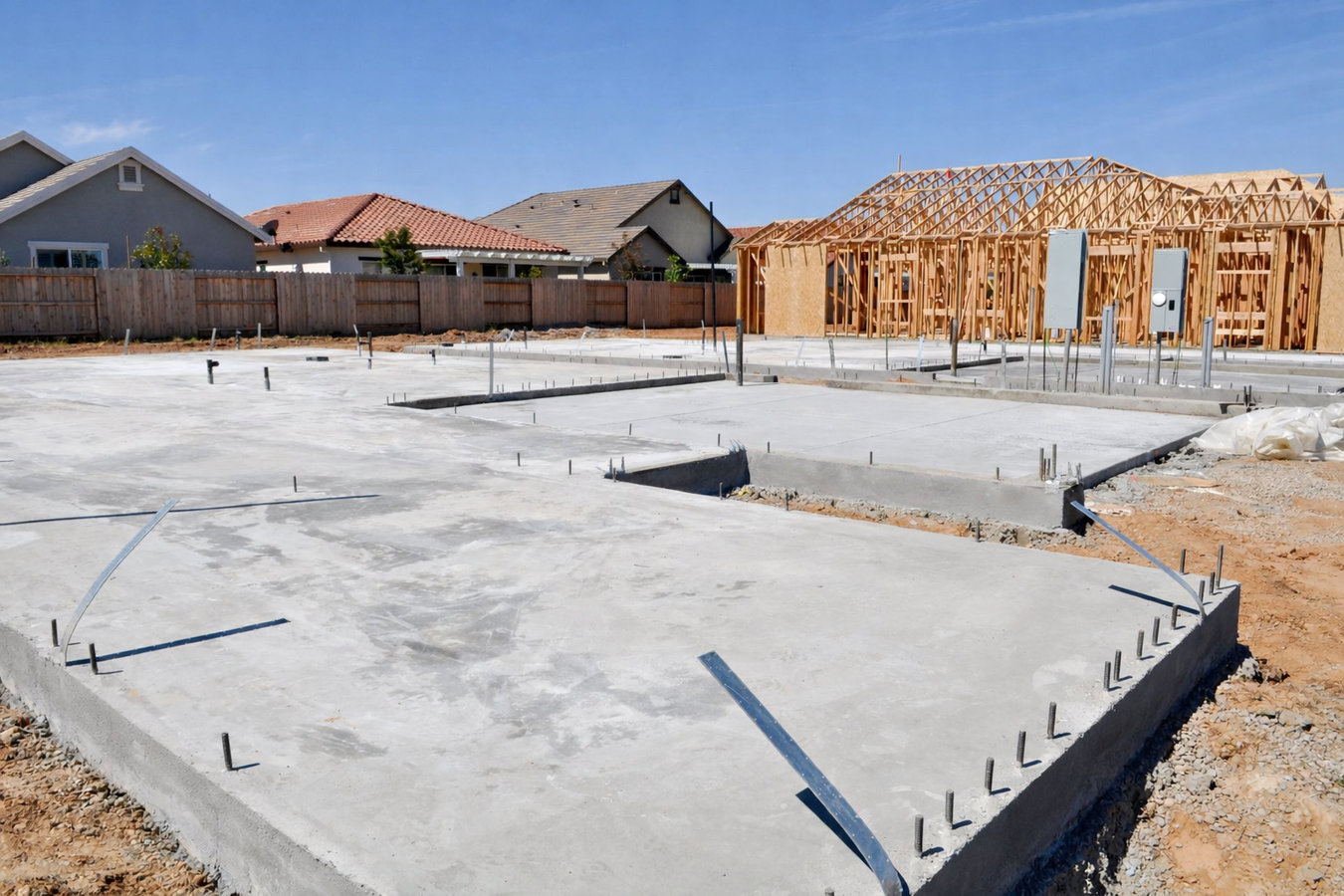
Lake Charles Concrete Company handles foundation installation, concrete driveways, patios, and slab work for Lafayette homeowners - with base preparation built for Lafayette Parish clay soil and the wet-dry cycles that come with 60 inches of rain a year. We respond within 1 business day.
Lafayette sits on flat, low-lying terrain with a high water table, and the vast majority of homes here are built on concrete slab foundations rather than raised or basement construction. Getting a slab right in Lafayette means accounting for soil saturation, drainage grading, and the flood zone requirements that apply to many addresses in the parish. Learn about our foundation installation process and what proper base preparation looks like in south Louisiana conditions.
A lot of Lafayette homes from the 1960s through the 1980s still have aging asphalt driveways that have been patched and re-patched over the years. Replacing them with concrete over a properly compacted base gives you a surface that holds up to the heat, rainfall, and wet soil conditions here without cracking and heaving every few years after a heavy wet season.
Lafayette backyards are wet. The flat terrain and clay-heavy soil mean that after a significant rain, water sits for hours or days rather than draining quickly. A properly graded concrete patio gives you usable outdoor space year-round and directs water away from your home's foundation rather than letting it pool at the base of the wall.
New construction and additions in Lafayette almost always go on a concrete slab because the water table here rules out below-grade construction. Whether you are building a new structure or adding a room, getting the slab thickness, reinforcement, and drainage slope correct from the start is what determines how that foundation performs over the next 30 years.
Lafayette neighborhoods with mature tree canopies - common in older areas near downtown and around the UL Lafayette campus - often have sidewalk sections that have heaved or cracked from root activity and soil movement. We remove damaged sections and pour new ones graded correctly to shed water and stay level over time.
Lafayette is a city built on flat, wet ground. The water table is high, annual rainfall exceeds 60 inches, and the clay-heavy soil beneath most of the city absorbs and releases moisture slowly throughout the year. Every concrete slab in Lafayette - driveways, patios, pool decks, foundation slabs - sits on ground that is doing something most homeowners never see. When that soil is properly compacted and the concrete above it is graded to drain correctly, slabs last for decades. When it is not, you start seeing cracks, trip hazards, and doors that do not close properly within a few years of a new pour. The soil conditions here are not forgiving of shortcuts during base preparation.
The flooding events of August 2016 and the hurricanes that followed left their mark on Lafayette housing stock in ways that are still being addressed. Homes that went through major flooding often had their subsoil disturbed as water moved through and under slabs. In some cases, concrete placed after those events was laid over poorly reconsolidated fill - which is why some Lafayette homeowners are now dealing with settlement problems in slabs that are only a few years old. Beyond flooding, the area gets tropical storm activity that sends wind and water through neighborhoods on a recurring basis. Concrete work done here needs to be built with those realities in mind, not treated as a standard job in a dry-weather market.
Concrete work in Lafayette falls under the permitting authority of the Consolidated Government of Lafayette Parish Planning and Zoning division. Foundation work, structural slabs, and driveways connecting to a public roadway all require permits, and properties in flood zones have additional elevation requirements we build into the project plan from the start.
Lafayette is a city with real neighborhood variation. The older brick ranch houses near downtown and the areas around Vermilionville present different site conditions than the newer subdivisions spreading south toward Youngsville and Broussard. Homes built in the postwar decades often have original drainage systems that were not designed for the volume of rain this area now receives. Newer subdivisions have different drainage infrastructure but are reaching the age where first-round repairs are starting to come due. We assess each site on its own rather than applying a single approach across a city this large.
We serve homeowners across south Louisiana and know how conditions change from community to community. If you are in Opelousas to the north or in New Iberia to the southeast, we bring the same base preparation standards your property needs in this part of the state.
We respond within 1 business day - no cost, no obligation. A few quick questions about your project type and property location helps us schedule the right visit.
We visit your property, evaluate soil conditions and drainage, measure the area, and give you a written estimate broken down by demolition, base prep, materials, and labor. We also flag any flood zone or elevation requirements that apply to your address before you commit to anything.
We handle the permit application with Lafayette Parish on your behalf. Once approval is issued - typically within a few business days - we set a confirmed start date in writing so your schedule is set.
Our crew handles every phase: demolition, base preparation, forming, pouring, and finishing. We clean up at the end. For driveways, plan to keep vehicles off the new slab for at least seven days after the pour is complete.
We serve Lafayette homeowners and businesses with free, no-obligation estimates. Call or submit a request and we respond within 1 business day.
(337) 549-5532Lafayette is the fourth-largest city in Louisiana, with about 120,000 people inside the city and roughly 240,000 in the wider parish. It sits in the center of Acadiana - the Cajun and Creole cultural region of south Louisiana - and serves as the unofficial capital of that region. The city has a strong economy built around oil and gas, healthcare, and the University of Louisiana at Lafayette, which enrolls roughly 17,000 students. That mix of longtime residents, energy industry workers, university staff, and students gives the city a varied housing market with a wide range of property ages and conditions.
The housing stock reflects the city's growth over several decades. The neighborhoods closest to downtown and the historic core - including the areas around Freetown-Port Rico and near Bayou Vermilion - have homes from the early 1900s through the mid-century period. Moving south and east, the housing shifts to the brick ranch houses that went up during the oil-driven boom of the 1960s through the 1980s. The outer suburbs in areas like Youngsville and Broussard are newer still, with subdivisions that have been filling in steadily since the early 2000s. Nearby communities like Crowley to the west share similar soil and climate conditions, and we serve homeowners throughout this corridor of south Louisiana.
Durable concrete driveways designed and poured to last for decades.
Learn moreCustom concrete patios that extend your outdoor living space beautifully.
Learn moreDecorative stamped concrete that mimics stone, brick, and wood at a fraction of the cost.
Learn moreSafe, smooth sidewalks built to local code for residential and commercial properties.
Learn moreStrong, level garage floors finished to withstand heavy vehicle traffic.
Learn moreArtistic concrete finishes that add curb appeal and lasting beauty.
Learn moreStructurally sound retaining walls that control erosion and shape your landscape.
Learn moreProfessional interior concrete floor installation for homes and businesses.
Learn moreSlip-resistant, attractive pool deck surfaces built for the Louisiana climate.
Learn moreSolid, code-compliant concrete steps for entryways, porches, and more.
Learn moreProperly engineered slab foundations that support your structure for the long term.
Learn moreComplete foundation installation services for residential and light commercial builds.
Learn moreCommercial-grade concrete parking lots built for high traffic and heavy loads.
Learn morePrecise concrete footings that provide a stable base for any structure.
Learn moreExpert foundation raising to level and stabilize settled or sunken structures.
Learn moreClean, accurate concrete cutting for repairs, utility access, and renovations.
Learn moreServing these cities and communities.
Whether your home is in an older neighborhood near downtown or a newer subdivision out south, we know Lafayette Parish soil and flood zone requirements - call now or submit a request and we respond within 1 business day.