
Loading...
Serving Lake Charles, LA and surrounding areas. (337) 549-5532
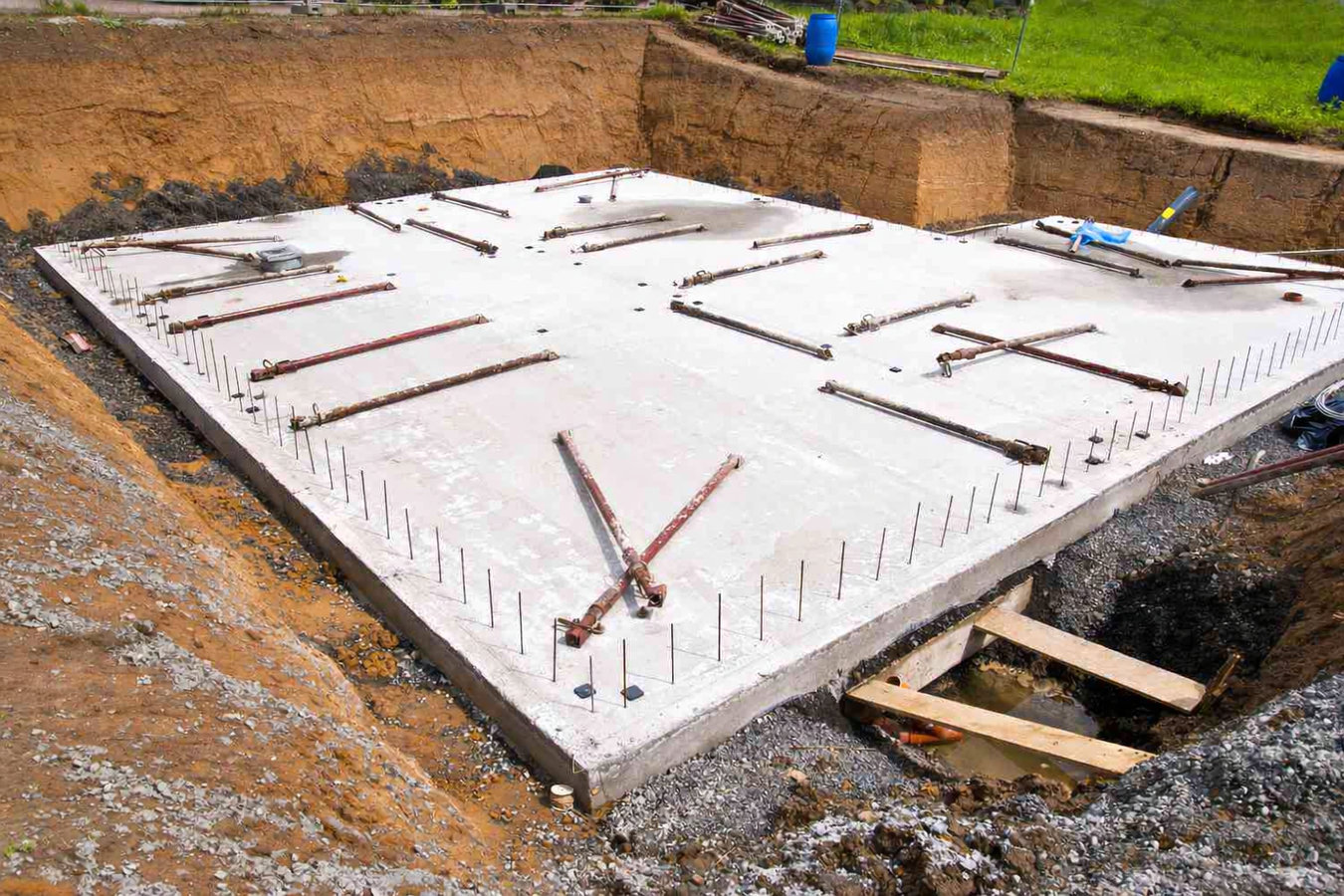
Adding a garage, patio, or room? The footing underneath it determines whether it stays level for decades or starts cracking within a few years - and Lake Charles clay soil demands footings built to a higher standard.
Concrete footings in Lake Charles are the buried base that spreads a structure's weight across stable ground below - most residential footing projects take one to two days to dig, form, and pour, with a seven-day cure before any load goes on top. They are invisible once construction is done, but they are the reason a structure stays level and square for decades or starts shifting within a few years.
In Lake Charles, getting footings right matters more than in most places. The clay-heavy soil here swells with every heavy rain and shrinks during dry spells, putting constant pressure on anything sitting above it. A footing that is too shallow, too narrow, or poured into poorly prepared ground will move with the soil - and the structure above it follows.
If you are planning something more substantial, our foundation installation service handles full foundation systems for new builds and major additions.
When the ground beneath a structure shifts, the frame above shifts too - and doors and windows are usually the first place you notice. In Lake Charles, clay soil swells during the wet season and contracts in dry spells, gradually pushing footings out of position. A door that used to swing freely but now drags or a window that no longer latches is worth a closer look at the foundation level.
Cracks that run diagonally from the corners of doors or windows, or that appear in a stair-step pattern along a brick wall, are a sign the ground is moving unevenly beneath the structure. In this area, those cracks often appear after a dry summer following a wet spring - the soil shrinks, the footing shifts, and the crack opens. A hairline is not always urgent, but a crack wide enough to fit a finger into needs a professional evaluation.
If you are adding a covered patio, detached garage, room addition, or large pergola, new footings are almost certainly required before any of that work begins. The city's building permit will require footings to be shown on your plans, and an inspector will confirm they are in place. Getting footings right at the start is far less expensive than correcting a tilting addition a few years later.
In Lake Charles's high-rainfall climate, water pooling consistently against the base of a wall or slab is working into the soil around your footings. Repeated wetting and drying weakens the soil's ability to support the structure above. If you see this pattern after heavy rain, a contractor should assess whether your footings are at risk - catching it early costs far less than dealing with a settled structure.
We handle site assessment, excavation, forming, steel reinforcement placement, and the pour - plus permit pulling with the City of Lake Charles and coordination of the pre-pour inspection. We assess your soil conditions before we quote, so the depth and width we design are based on what your specific lot actually requires, not a one-size-fits-all standard. In Lake Charles, that site-specific approach is not optional - the clay conditions vary enough from neighborhood to neighborhood that guessing is not an acceptable approach.
For homeowners whose existing footings have already shifted, our foundation raising service lifts and levels settled structures before the problem advances further. Both services are available together when a project requires it.
For room additions, covered patios, and structures that run along a continuous line.
For detached garages, pergolas, posts, and point-load structures that need individual support.
Wider, deeper footings for concrete retaining walls that hold back soil on sloped lots.
For older homes in Lake Charles where existing footings have shifted or no longer meet current standards.
Most of the country sizes footings around how deep the ground freezes in winter. Lake Charles does not have that concern - the ground here rarely freezes. What we do have is clay-heavy soil that swells with every heavy rain and contracts during dry spells, a water table that sits close to the surface in many neighborhoods, and hurricane wind-load requirements that are stricter than most inland states. Those three factors together mean the footings that work in other parts of the country are not always adequate here. Footings need to reach stable, undisturbed soil, be wide enough to resist lateral pressure from wet clay, and be connected to the structure above in a way that meets local wind standards. After Hurricane Laura in 2020, the gap between well-built and poorly built structures became very visible across this city.
We work across the Lake Charles area, including communities like Sulphur and Westlake, where the same coastal-plain soil conditions apply. The American Concrete Institute and the Louisiana State Licensing Board for Contractors both provide standards and verification tools that homeowners can use to evaluate any contractor they are considering.
We respond within 1 business day. We will ask about what you are building, where it will go, and whether you have noticed any settling or water issues near the area. No cost, no obligation.
We come to your property, assess the soil conditions, and determine the depth and width your footings need. The written estimate reflects what your lot actually requires - no generic quotes over the phone.
We apply for the required City of Lake Charles building permit and schedule the pre-pour inspection - the inspector must approve the trench depth before any concrete goes in. We handle all of this on your behalf.
Crew excavates the trench, sets forms, places steel reinforcement, and pours the concrete. After the pour, the footing needs at least seven days to cure before any structure is built on top - your contractor will give you a specific timeline.
We assess your soil conditions, handle the permit, and coordinate the inspection - you do not have to navigate the city's building department on your own.
(337) 549-5532We assess your specific lot before we quote. Lake Charles clay conditions vary enough between neighborhoods - Broadmoor, Prien Lake, Moss Bluff - that a depth that looks right on paper may not be enough for your ground. We do not guess.
The City of Lake Charles requires an inspector to approve the trench before concrete is poured. We schedule and coordinate that inspection as part of every footing job. You get an independent confirmation that the work meets city standards - before it gets buried.
Louisiana's building code requires footings in this area to meet stricter wind-load requirements than most inland states. After what Lake Charles went through with Hurricanes Rita and Laura, that is not an abstract requirement - it is the difference between a structure that survives a major storm and one that does not.
Our license is verifiable through the Louisiana State Licensing Board for Contractors at lslbc.louisiana.gov. We carry liability insurance and workers' compensation - and we provide documentation without being asked. Underground work especially deserves a licensed contractor, because once it is buried, there is no going back.
Footing work is the one part of a construction project where you absolutely cannot cut corners - it is underground and invisible once the job is done. The time to get it right is before the concrete is poured, not after.
Lift and level a settled foundation before water intrusion or structural damage gets worse.
Learn moreComplete foundation systems for new builds and major additions on Lake Charles properties.
Learn moreWe pull the permits, handle the inspection, and get your footings done right the first time - contact us now before our schedule fills up.